Abu Tareq revives rababa tradition for new generations
Summary and headline written by AI from the source article. How we work
Ziad Al-Masri, known as Abu Tareq, shares his skills with the rababa, a traditional stringed instrument, by teaching young people in Jordan.
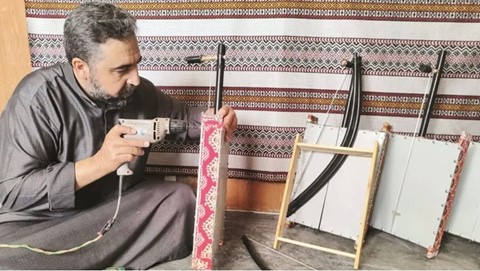
After leaving his home in Daraa, Syria, in 2013, Abu Tareq settled in the Zaatari camp for Syrian refugees and continued his dedication to this folk art. He believes preserving the rababa requires not only playing it, but also passing on the knowledge of how to build and perform with it.
Abu Tareq’s work extends beyond music to include crafting the rababa itself, composing Nabati poetry, and performing Hijini, a traditional art form linked to popular expression. He views the instrument as a vital part of Arab cultural memory, especially within Bedouin communities, and a way to connect music, poetry, and craftsmanship. He performs at events and uses social media to reach a wider audience, encouraging young people to learn the instrument and understand its place in folk heritage.
Abu Tareq emphasizes that the rababa’s survival depends on a combination of playing, craftsmanship, and education, ensuring that this art form, and the stories it carries, continues for future generations. He sees the instrument as a way to express memories of his homeland and connect with his new community in Jordan.