Hospital companions build shared solidarity through waiting
Headline and summary by local AI
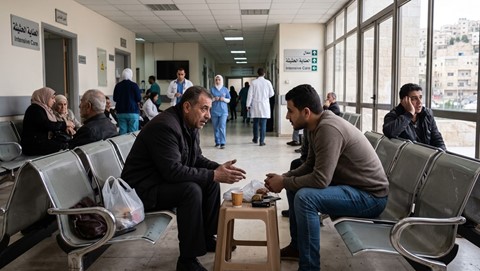
Family members and friends of patients in Amman, Jordan, form temporary bonds of support while waiting for news in hospital corridors.
Ali and Salwa describe how the long hours spent in hospital lounges transformed them from strangers into sources of mutual support. While Ali initially chose silence while his father suffered a stroke, the repetitive nature of the wait eventually led him to engage with other companions.
These interactions began with simple questions about treatment and hospital services but evolved into shared conversations about personal fears, exhaustion, and the disruption of daily life caused by illness. Salwa experienced a similar shift while her mother faced a deteriorating condition. She found that talking to other companions provided a way to regain calm and unburden herself. These brief relationships often involve small acts of solidarity, such as keeping a seat free or fetching a drink for a tired peer.
These actions help individuals feel less isolated during periods of high anxiety and uncertainty. Raeda Al-Kilani, a psychologist, explains that these connections ease the psychological exhaustion caused by prolonged waiting and a sense of powerlessness. She notes that while these conversations do not replace professional support, they offer a vital measure of human connection. Sociologist Hussein Khazai adds that these bonds emerge because shared experiences like anxiety and hope become more important than social differences.
These relationships may be brief, but they provide a sense of belonging to those facing difficult circumstances.
Selected and summarized by local AI How we work
Belonging: Community bonds, rootedness, and living cultural practices and heritage.