Jordanian community traditions of mutual support fade due to urbanization
Headline and summary by local AI
Jordanians historically practiced a social custom called "al ayriya," where neighbors and relatives borrowed and shared household items to manage daily life and social events.
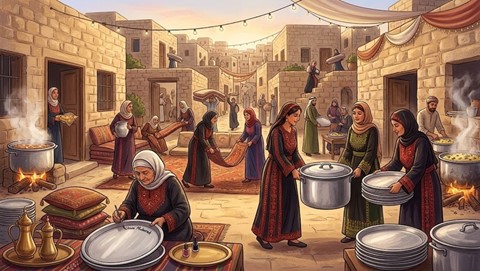
In rural Jordanian society, families relied on mutual trust to share large cooking pots, coffee pots, and furniture like mattresses. Women often marked their personal utensils with nail polish to identify them when they were moved between houses for weddings or mourning ceremonies.
This practice allowed families to host large gatherings and manage agricultural needs, such as harvesting and livestock care, without needing to own every tool individually. Researcher Nayef Al Nawaise explains that these practices were part of a social system built on cooperation. Beyond kitchenware, the community shared construction tools and even livestock through a custom called "manīha," where neighbors could borrow animals for milking.
These interactions turned simple objects into bridges of affection, where returning a borrowed pot often included a small gift of food as a gesture of gratitude. Modern changes have led to a decline in these traditions. Al Nawaise attributes this shift to the move from rural houses to city apartments, the rise of catering services, and the increased availability of household goods.
While the custom has faded as life has accelerated and housing patterns have changed, some families still maintain the practice within close-knit circles of neighbors and relatives.
Selected and summarized by local AI How we work
Belonging: Community bonds, rootedness, and living cultural practices and heritage.