World Bank program expands climate resilience for Jordanian farmers
Summary and headline written by AI from the source article. How we work
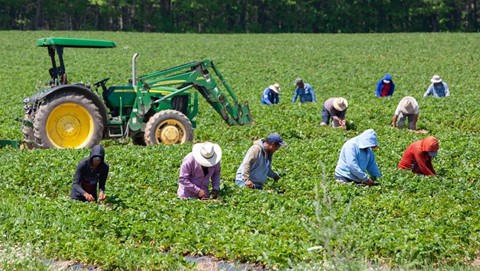
The World Bank launched the Ardi program in Jordan to help farmers manage climate risks and develop agricultural value chains.
The initiative provides funding for water harvesting, training, and production development to strengthen the country's agricultural sector. The program has already improved the climate risk capacity of 111,508 people, including over 54,000 women and 37,000 young people. It provided agricultural services and assets to 63,812 farmers.
The project also created over 2.24 million cubic meters of rainwater harvesting and storage capacity. In the Badia regions, 10,650 households gained better water access for livestock. Training efforts included 3,313 farmers who learned climate-smart techniques using both traditional methods and virtual reality tools. While the program distributed 852,000 drought-resistant seedlings, it faced some challenges. No trainees remained employed by companies after completing skills training, and several targets regarding export traceability and digital extension services have not yet been met.
The World Bank disbursed $116.95 million of the $241 million total financing to date. The organization rated the progress toward development objectives as satisfactory, though it noted that overall implementation risks remain substantial. The program continues until 2030.
How we evaluated this
More in Solutions

CRDB Bank aims to boost Tanzania economy to 1 trillion dollars through agriculture
mwananchi.co.tz · 30 Oct 2026

World Bank approves $150 million to boost property tax collection in Sindh
tribune.com.pk · 31 Oct 2026
California passes new laws to integrate distributed energy resources into power grid
utilitydive.com · 28 Oct 2026