Ancient palace reveals detailed horse sculptures
Summary and headline written by AI from the source article. How we work
Archaeological excavations in the Palestinian Badia uncovered remnants of an Umayyad-era complex, including a palace known as Qasr Hisham, north of Jericho. Built between 724 and 743 CE, the palace was commissioned by the tenth Umayyad caliph, Hisham, and later expanded by his successor, Walid bin Yazid. It was damaged by an earthquake in 746 CE but rediscovered in modern times.
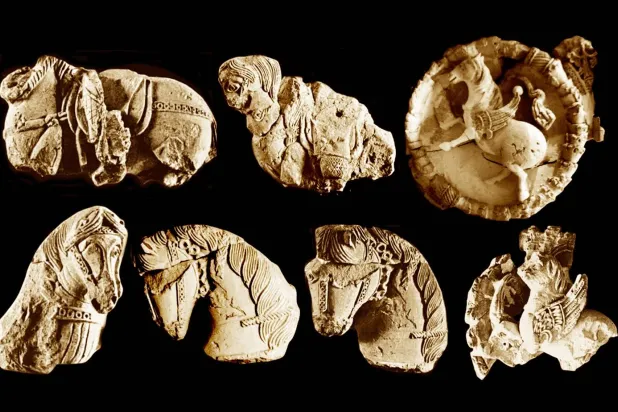
The site, first explored in the mid-19th century during the Ottoman period and continued under the British Mandate, has yielded a vast collection of sculpted fragments. These pieces demonstrate a diverse range of artistic styles and frequently depict animals, notably horses with saddles. In 1934, the British Department of Antiquities surveyed the site and transferred its finds to the Palestine Archaeological Museum in East Jerusalem, which opened in 1938.
Over twelve years of surveying uncovered numerous engraved stone fragments, identified as pieces of the palace’s original decorations. These fragments were preserved at the museum, later renamed the Rockefeller Museum after a donation from John D. Rockefeller Jr. The museum now serves as the headquarters for the government’s Department of Antiquities. Researchers carefully studied these partial pieces to reconstruct the artistic form of the horses.
Some depict fully formed, saddled and bridled horses, while others show winged horses reminiscent of imagery from Iranian art and Byzantine textiles. The sculptures incorporate techniques like carved plaster and combine geometric patterns with pictorial elements, reflecting influences from Mediterranean, Persian, and Central Asian art. The details of the horses, their heads with expressive features, manes, and elaborate bridles, reveal a skilled and innovative artistic tradition.