Siberian cave reveals unknown ancient yak relative
Summary and headline written by AI from the source article. How we work
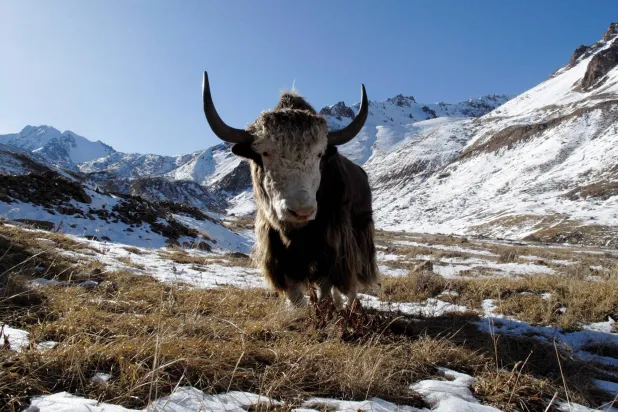
Researchers in Siberia discovered genetic evidence of a large mammal, a relative of the yak, that lived during the Ice Age.
The scientists excavated bone fragments from Denisova Cave, a site in the Altai Mountains of southern Russia famous for remains of the extinct Denisovan hominin. They extracted DNA from 20 bone fragments, 14 from Denisova Cave and six from other sites in the region, and determined the fragments belonged to a previously unknown lineage of cattle.
The oldest sample dated to between 200,000 and 250,000 years ago, while the most recent was around 27,000 years old. The bones were too fragmented to identify the animal through physical characteristics alone, but the genetic analysis revealed it diverged from the ancestors of modern yaks approximately 400,000 years ago. Researchers temporarily named the animal “Yak X” because they need more evidence to classify it as a new species.
Lova Dalén, an evolutionary geneticist at the Centre for Ancient Genetics, noted the unusual nature of identifying a large mammal from such small bone pieces. He believes advances in ancient DNA technology made the discovery possible, providing a powerful new source of information for studying ancient remains. Scientists believe Yak X coexisted with other Ice Age animals like bison, aurochs (the wild ancestor of domestic cattle), mammoths, and cave hyenas.
They estimate the animal likely resembled a yak more than a bison, and probably declined in numbers during a warming period around 120,000 years ago before eventually going extinct.