Umayyad sculptures reveal royal life in Syrian desert
Summary and headline written by AI from the source article. How we work
Archaeologists have uncovered female sculptures at Qasr Hisham, an Umayyad palace near Jericho in the Palestinian territories, revealing details about life in the early Islamic empire.
In the late 19th century, exploration of ruined Umayyad structures in the Syrian Desert began, leading to extensive surveys and excavations by foreign missions in the early 20th century.
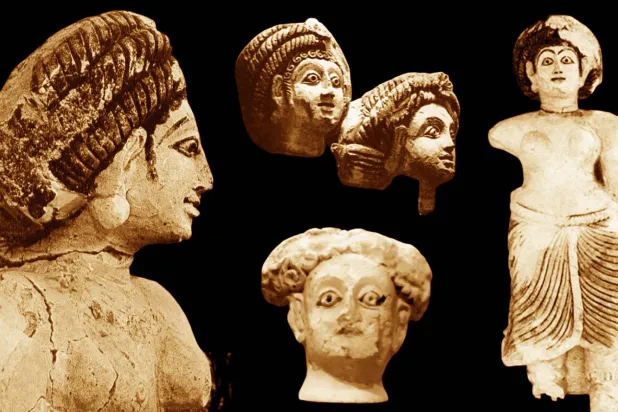
These efforts revealed not only religious buildings, but also large civil structures known as “desert palaces.” Many of these palaces featured elaborate carved decorations, including sculpted figures, with female statues being particularly prominent. The most significant collection comes from Qasr Hisham, built by the tenth Umayyad caliph Hisham ibn Abd al-Malik and later used by al-Walid ibn Yazid.
A British expedition excavated the palace in the 1930s and transferred its findings to the Museum of Palestine, later known as the Rockefeller Museum. The statues, around 1.5 meters tall, likely represent palace attendants and share a common style. They depict women standing with raised arms, wearing simple garments and often adorned with jewelry and holding flowers. While seemingly uniform at first glance, each statue possesses unique details in posture, ornamentation, and facial features.
The sculptures reflect artistic influences from the Sasanian tradition and earlier local styles found in sites like Palmyra and other Jordanian desert palaces, like Qusayr Umra and Qasr al-Mushatta.