Umayyad art reflects diverse cultural influences through female sculptures
Headline and summary by local AI
Archaeological finds from Qasr al-Hayr al-Gharbi in the Syrian desert reveal how Umayyad art integrated diverse cultural styles through female sculptures.
Archaeologists identified a variety of artistic styles in the heritage of the Umayyad period. These styles appear in murals at Qasr Umra in the Jordanian desert and in stone sculptures from Qasr Hisham in the Palestinian desert. In contrast, the sculptures from Qasr al-Hayr al-Gharbi in Syria show a mix of local and international influences.
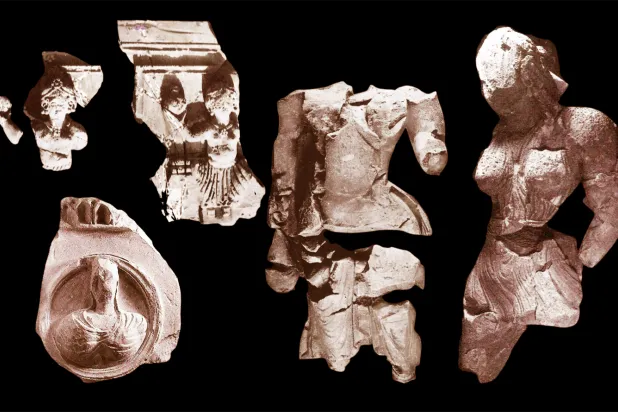
One set of sculptures reflects Sasanian traditions from the Iranian world, while others show classical Roman styles that were common across the Middle East before the rise of Islam. The finds at Qasr al-Hayr al-Gharbi include broken pieces of different sizes. Two large pieces depict women in a style derived from Sasanian traditions. One statue retains a head with braided hair and a circular earring, while the body shows a curved waist and a long robe with a wide belt.
Another similar sculpture faces forward, a pose that deviates from traditional Sasanian styles and reflects local traditions from Palmyra and other areas in the Syrian desert. Other pieces from the site suggest a different artistic lineage. A plaster fragment measuring 60 centimeters in length and 48 centimeters in width depicts a woman in a classical Roman dress with a head covering.
Another set of pieces shows a woman in a forward-facing pose holding a pomegranate, which symbolizes fertility in classical art. This specific model also appears at Qasr Hisham near Jericho, where four complete female statues share the same unique Umayyad style found at Qasr al-Hayr al-Gharbi.
Selected and summarized by local AI How we work