Ancient wall under Paris hospital may reveal city’s origins
Summary and headline written by AI from the source article. How we work
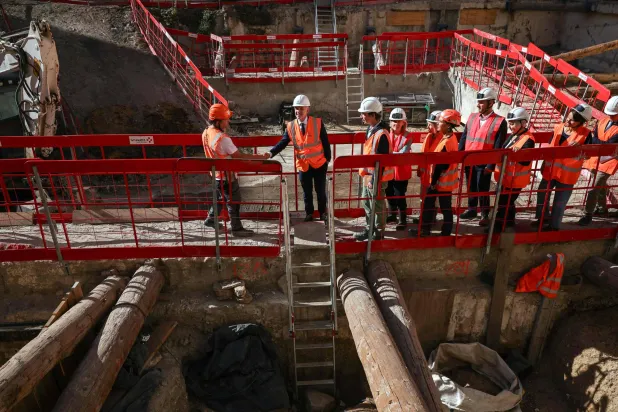
Archaeologists in Paris, France, uncovered an ancient wall during excavations beneath a hospital on Île de la Cité, near Notre Dame Cathedral.
The French Ministry of Culture announced the discovery as a major achievement that could resolve a long-standing debate about the location of the first settlement in the city.
The wall, constructed from stone and wood, is believed to be part of the fortifications of Lutetia, the ancient name for Paris, built by the Parisii Gallic tribe who lived along the Seine River during the Iron Age. Traditionally, Île de la Cité has been considered the center of Lutetia, but some archaeological research suggests the original settlement was located in Nanterre, a suburb west of Paris.
French Culture Minister Catherine Pegard stated the find may be among the most important archaeological remains ever discovered for understanding Lutetia during the Gallic period. The wall, which extends approximately 20 meters, shows evidence of fire that potentially aligns with accounts from Julius Caesar describing the Gauls burning their city before the Battle of Lutetia. Carbon dating of charred materials indicates the wall dates to between 200 and 10 BC, a period including the battle of 52 BC.
Experts will continue to verify the wall’s function and timeline, but initial evidence strongly suggests its connection to the ancient city’s origins.

/https://tf-cmsv2-smithsonianmag-media.s3.amazonaws.com/filer_public/5f/6c/5f6c0f39-bd93-4c2a-9605-b518b8574158/irish_sheep_71088397.jpeg)
