Dreams and their interpretation in Islamic culture
Summary and headline written by AI from the source article. How we work
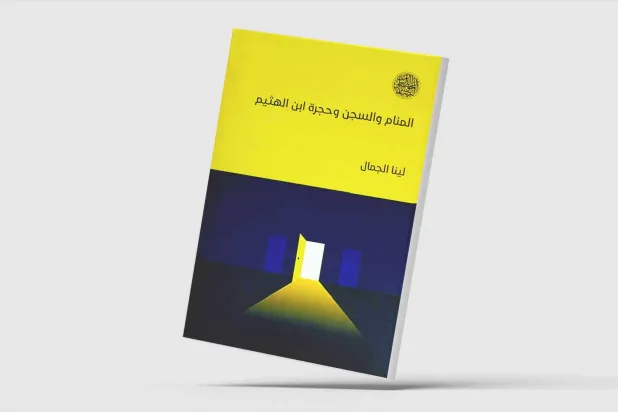
Lebanese academic Dr. Lina Al-Jammal’s book, “The Dream, The Prison, And Ibn Al-Haytham’s Chamber,” examines dreams and their interpretation in early Islamic cultures.
The book explores how people understood, evoked, and utilized dreams, connecting this practice to concepts of space as both a physical entity and an idea. Al-Jammal links Arab-Islamic civilization to older traditions like incubation and visiting graves, while also considering how physical environments influenced the dreams of prisoners and architectural interpretations of dream imagery.
The research divides into five sections that analyze the connection between dreams and space, considering both the dreamer’s location and the settings within the dreams themselves. One section details eleven methods used in early Islamic dream interpretation, noting factors like the dreamer and interpreter’s condition, the time and place of the dream, and the storytelling style. It also addresses complex issues such as verifying dream accounts and the occurrence of shared dreams.
Al-Jammal also investigates the practice of haluma, a form of incubation, tracing its roots to ancient Greek, Indian, and Egyptian civilizations and its evolution within the Arabian Peninsula. She finds connections between haluma and Islamic prayer, noting how seeking dreams through overnight stays near sacred places shifted from graves to prayer niches.
Furthermore, the book analyzes the dreams of prisoners documented in “Relief After Distress,” finding parallels between the stories of a minister named Yaqub bin Dawood and the prophet Joseph.